
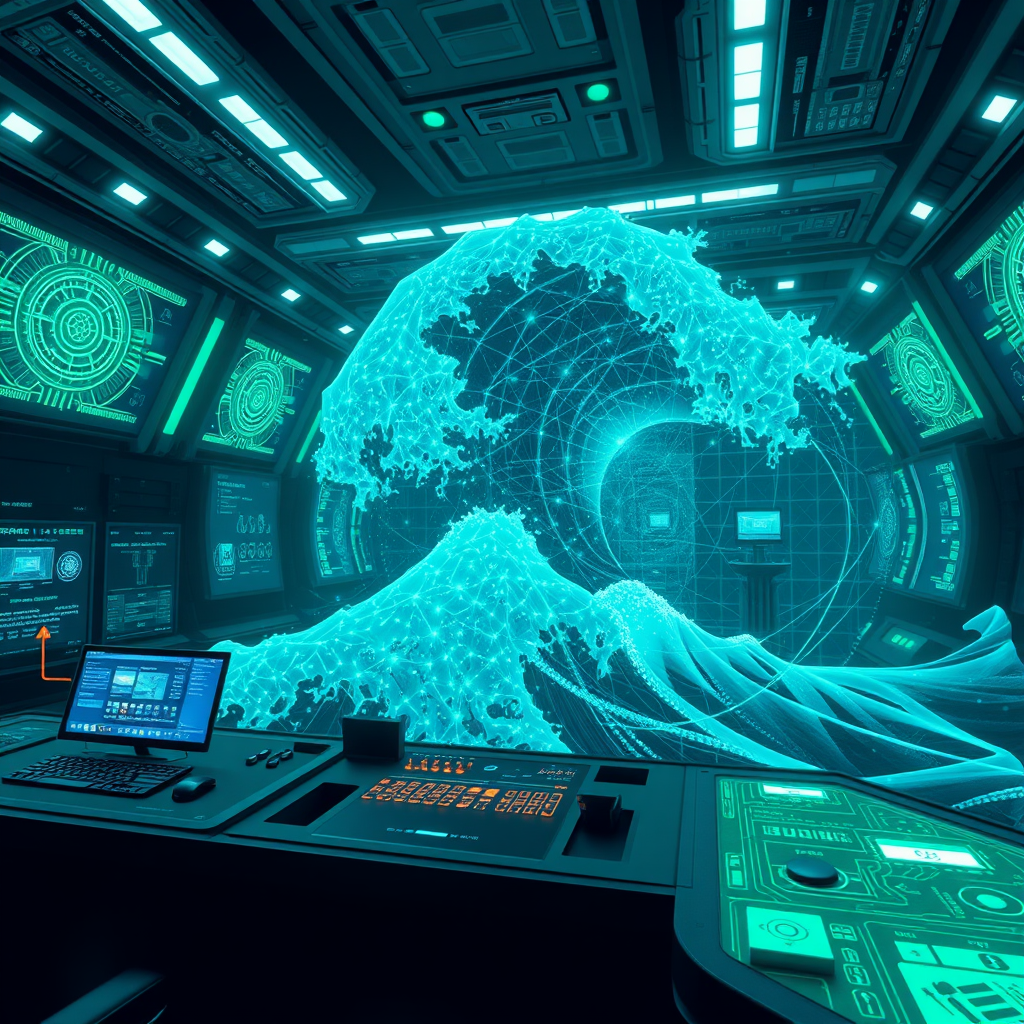
The Ultimate 1-Bit Hokusai: AI Redefines 'The Great Wave'
What happens when you combine the timeless beauty of Hokusai's "The Great Wave" with the cutting-edge power of ai? You get a mesmerizing 1-bit pixel art masterpiece that's as much about the art of creation as it is about the art itself. Honestly, I'm still blown away by the sheer detail and elegance of this piece - it's like a digital tribute to the original, distilled into a breathtakingly simple yet complex form.
As I delved into the story behind 1-Bit Hokusai's "The Great Wave", I stumbled upon an old project that aimed to recreate all 36 views of Mount Fuji as 1-bit pixel art (check out the inspiring story). The creator's passion for getting into a 'flow state' while working on this project resonated with me - there's something therapeutic about crafting each pixel to fall into place, capturing the essence of the original. But here's the real question - can ai take this creative process to the next level, enabling unprecedented agentic workflows?
In my view, the answer lies in the realm of autonomous AI, where machines can learn from human artists and even collaborate with them. Imagine an ai system that can analyze the styles of renowned artists like Hokusai and generate stunning 1-bit pixel art pieces that not only pay homage to the originals but also introduce novel elements. We're already seeing the potential of ai in art with the rise of deep learning models like DeepSeek V4, which is revolutionizing agentic workflows (as we discussed in our Unlocking DeepSeek V4 article). But what's next for autonomous AI in the art world?
The AI-Powered Art Renaissance
As ai continues to advance, we can expect to see more breathtaking fusions of human creativity and machine learning. The future of GPT, in particular, holds tremendous promise for autonomous AI applications in art (we explored this in our The Future of GPT article). With the likes of GPT-5.5, we're witnessing the emergence of more sophisticated agentic workflows that can handle complex tasks, from content creation to art curation. But can ai truly create art that moves us, or is it just a clever imitation?
Bridging the Gap between Human and Machine Creativity
To answer this question, let's consider the concept of agentic workflows, where human and machine collaborate to produce something entirely new. Think of it like a symbiotic relationship, where ai amplifies human creativity, and humans provide the emotional depth and context that ai systems often lack. We've seen this in action with the GPT-5.5 playbook, which offers a comprehensive guide to harnessing the power of autonomous AI in various applications, including art.
| Human Creativity | AI Amplification | Output |
|---|---|---|
| Emotional Depth | Style Transfer | Stunning Art Pieces |
| Contextual Understanding | Pattern Recognition | Innovative Designs |
| Imagination | Generative Models | New Art Forms |
As we continue to push the boundaries of ai in art, we're forced to confront the limitations of our current understanding. But here's what I think - the future of art is not about replacing human creativity with ai, but about augmenting it. By embracing autonomous AI and agentic workflows, we can unlock new levels of innovation and artistic expression.
So, what's the ultimate potential of 1-Bit Hokusai's "The Great Wave" reimagined with ai? It's a question that sparks both excitement and trepidation. As we venture into this uncharted territory, we must ask ourselves - are we ready to redefine the boundaries of art and creativity, and what role will ai play in shaping this new landscape? Only time will tell, but one thing is certain - the fusion of ai and art is an unstoppable force that will continue to inspire and challenge us in the years to come.