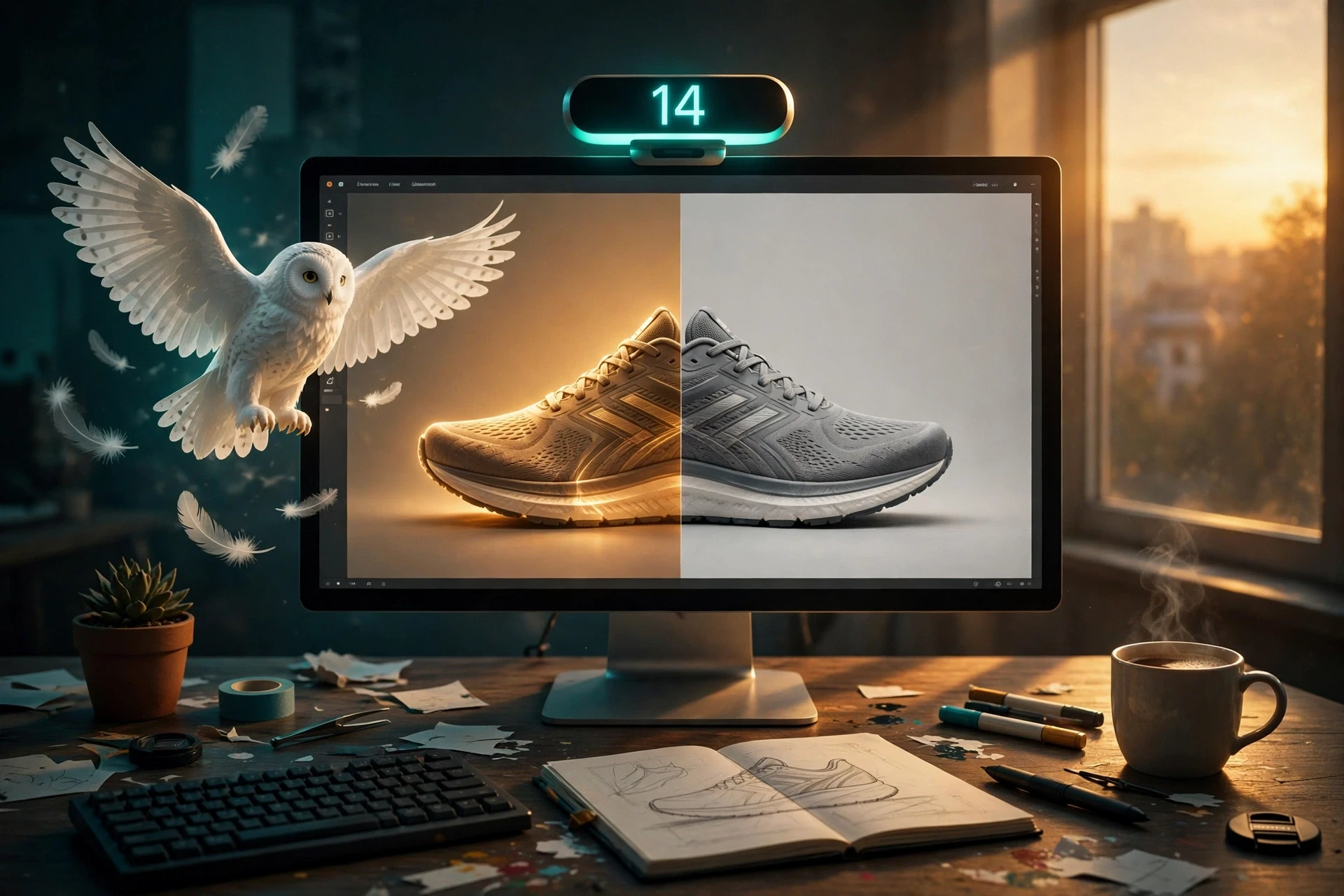
Unlocking Seedream 5.5: Edit One Image 100 Times and It Still Holds Together
Every image model can make a pretty picture on the first try. Almost none survive the tenth edit. Change the jacket, and the face shifts. Fix the label text, and the background warps.
ByteDance Seed says that loop is over. On November 9, 2026, it released Seedream 5.5, built for one thing: edit the same image 100 times, and the parts you did not touch stay exactly where they were.
It lands five days after OpenAI shipped GPT Image 2.6. Here is what it does, what it costs — and the caveat behind the numbers.
What Seedream 5.5 Actually Is
Seedream 5.5 is ByteDance Seed's newest image model, the successor to Seedream 5.0 Pro. It is rolling out across Jimeng, Doubao, Doubao Work, and Volcano Engine Ark in China, plus Dreamina, CapCut, and BytePlus internationally. A Pro version is planned, with no date yet.
It does three things: pixel-level stable editing across up to 100 consecutive edits; native RGBA output, with a real alpha channel generated in the model, not cut out afterwards; and more realistic rendering — better lighting, materials, and skin, with less of the waxy gloss and overexposure that scream AI.
The 100-Edit Test: Why Pixel-Level Stability Changes the Workflow
ByteDance's demo is simple: the same character, edited 100 rounds in a row. Each round changed one thing — the clothing, the glasses, a ring, an item on the table. At round 100, the image was still sharp and everything untouched was exactly where it started.
Every other model re-imagines the whole frame with each edit, and the parts you liked slowly melt: faces drift, logos morph, product colours wander. That drift is why real teams still do revisions by hand.
Seedream 5.5's promise is that only the requested region changes — the tenth tweak does not undo the first nine. That turns the model from a slot machine into a revision tool: brief, adjust, adjust again, ship.
One honest note: the 100-round figure is ByteDance's own demo, not an independent test. The real question is whether round 30 holds up on your product shot, with your brand colours, on a deadline. Test it yourself first.
Native RGBA: Transparent Assets Without the Cutout Step
The second feature is the one designers will feel first: a native alpha channel. Ask for a snowy owl with its wings spread, and it comes back with a transparent background, even handling the tiny gaps between feathers.
That kills a whole workflow. Today, a transparent product shot means generating, removing the background, cleaning the edges, then fixing the halo around hair, fur, or glass. Native transparency skips all of it, and handles partial transparency — glass, thin fabric — where cutout tools fail hardest.
Text That Finally Reads: 0.4% Severe Corruption
Third upgrade, and possibly the most useful: in ByteDance's own evaluations of dense small text in Chinese and English, severe text corruption dropped to 0.4%, minor corruption to 1.7%.
That unlocks labels, posters, packaging, infographics, and menus — work where one garbled letter bins the image. A 0.4% severe rate means roughly one badly mangled word in 250. Not perfect, but text-heavy work moves from "impossible" to "checkable."
ByteDance also reports +55.62% on image-to-image realism versus Seedream 5.0 Pro in internal GSB scoring, positive across all four metrics, and says internal MagicArena tests put it ahead of GPT Image 2.5 Sunburst and Nano Banana 2.1 on text structure and realism.
The caveat, stated plainly: every number here — the 0.4%, the +55.62%, the leads over GPT Image and Nano Banana — comes from ByteDance's own testing, methodology unstated, with no independent benchmark yet. That does not make them false. It makes them unconfirmed. Test the model; do not take the numbers as proof.
Seedream 5.5 vs GPT Image 2.6 vs Seedream 5.0 Pro: The Head-to-Head
GPT Image 2.6 is the rival that matters most. OpenAI released it on November 4, 2026, in two tiers — Flare for speed, Sunburst for detail — at the same token rates as 2.5: about $0.025 per 1024×1024 image at low quality, $0.043 at medium, $0.053 at high. It is roughly 50% faster than 2.5, adds GIF and SVG output, and ships inside every ChatGPT plan.
| Feature | Seedream 5.5 | GPT Image 2.6 | Seedream 5.0 Pro |
|---|---|---|---|
| Maker | ByteDance Seed | OpenAI | ByteDance Seed |
| Released | Nov 9, 2026 | Nov 4, 2026 | Earlier in 2026 |
| Headline trick | 100 consecutive edits, pixel-stable | ~50% faster, GIF + SVG output | Strong single-shot generation |
| Consecutive edits | Up to 100 rounds, unedited regions held | Multi-round, steadier than 2.5 (no round count published) | Drifts over repeated edits |
| Transparent output | Native RGBA, incl. semi-transparency | Transparent background via API (billed per token) | Background removal needed |
| Severe text corruption | 0.4% (vendor-reported) | Not published as a corruption rate | Worse (no figure published) |
| Realism vs predecessor | +55.62% GSB image-to-image vs 5.0 Pro | Faster, not a realism leap over 2.5 | Baseline |
| Price per image/edit | ~0.28 RMB per 2K edit in-app | ~$0.025–$0.053 per 1024×1024 via API | Higher than 5.5 in some tiers |
| Where to use it | Dreamina, CapCut, BytePlus, Doubao, Jimeng | ChatGPT, Codex, OpenAI API | Dreamina, BytePlus |
| Weak spots | Vendor-only benchmarks; Pro version still coming | Low-quality images cost 4.2x more than 2.5 did | Outclassed by its own successor |
The table tells the story in one line: Seedream 5.5 wins the editing workflow — the long revision chain and the transparent asset — while GPT Image 2.6 wins on reach and speed, sitting inside ChatGPT where hundreds of millions of people already work.
Where It Wins: Film, TV, and the Office
ByteDance says Seedream 5.5 beats 5.0 Pro across six use cases — e-commerce, marketing, film and TV, gaming, office, and fashion — with usability in film/TV and office more than double its predecessor.
Those two are where long edit chains matter most. Film needs the same character, costume, and lighting across dozens of frames and revisions; an office team needs the same deck visual tweaked for twelve meetings without the logo drifting.
It is the same shift we saw in video last week: Gemini Omni 1.2 Flash turned video generation into a conversation instead of a slot machine, and Seedream 5.5 is doing the same for still images. The model that remembers what you made fits a real pipeline.
The Price Math: Pennies per 2K Edit
A 2K edit costs around 0.28 RMB — roughly four US cents, below Seedream 5.0 Pro in some tiers. A hundred rounds of revision on one image runs about four dollars at in-app pricing, and most real jobs will never need a hundred rounds.
Official API pricing has not been published yet.
GPT Image 2.6 runs about $0.053 per high-quality 1024×1024 image via OpenAI's API — the same ballpark. So the decision is not price per picture, but how many pictures you throw away. If Seedream's stability claim holds, you re-roll less and the cost per finished asset drops fast — the same lesson as the real cost of GPT-6 Cyber.
Your Playbook: Stress-Test Seedream 5.5 for Under $5
Do not take ByteDance's word for it — or mine. Five dollars and one afternoon beats any launch demo:
- Pick one real job — a product shot, poster, or character you actually need, not a demo prompt.
- Generate the base image in Dreamina or CapCut and save the original.
- Run 10 chained edits — colour, label text, background, one prop at a time — zooming into an untouched corner after each round to check it against the original.
- Push to 25 rounds, then put round 1 and round 25 side by side. Same face? Same logo? Same product colour?
- Test dense small text — a label and a poster, in English and Chinese if you can.
- Generate a transparent asset — an owl, a bottle, glasses — drop it on a coloured background and inspect the edges for halos.
- Price the same job on GPT Image 2.6 — same brief, medium and high — and compare total cost, time, and re-rolls.
If Seedream survives step 4 with untouched regions intact, it earns a place in your workflow. If it drifts like everything else, you spent five dollars to learn that — cheap tuition.
Final Takeaway: The Edit Chain Is the Product Now
Seedream 5.5 is not the prettiest image model of the year, and ByteDance does not claim it is. Its bet is narrower: the model that survives a hundred revisions is the one professionals will use, because professional work is revision.
Native transparency, readable small text, a 2K edit for four cents — a tool built for production, not first impressions. The open question is whether the vendor's numbers hold up outside ByteDance's lab — until independent tests arrive, it is ByteDance grading its own homework.
So test it. Run the playbook, count the drift yourself, decide on your images, not their press release. If the 100-edit promise is real, the war just moved from the prettiest first draft to the last revision.
The editorial team behind AI Agents Force — publishing deep dives on AI agents, agentic workflows, autonomous systems, and the tools shaping the future of intelligent automation.
Browse all articles →Related Articles
Unlocking Tencent Hy4: The Quiet Chinese Flagship That Outscores Inkling 2 Small — But the Weights Aren't Here Yet

Unlocking Ripple-65B Preview: The 65B Open-Weight Coder You Can Download Today — While Inkling Still Waits